Service area
Tree removal in Placerville, CA
Placerville sits at about 1,867 feet, right on the line where the oak woodland of the lower county starts giving way to pine. That is the first thing that makes the county seat its own kind of tree job: a single older lot in town can hold a big spreading oak, a couple of tall gray pines, and a cedar somebody planted fifty years ago, all leaning over the same roof. Call to get connected with a licensed local tree service that works the seat every week.
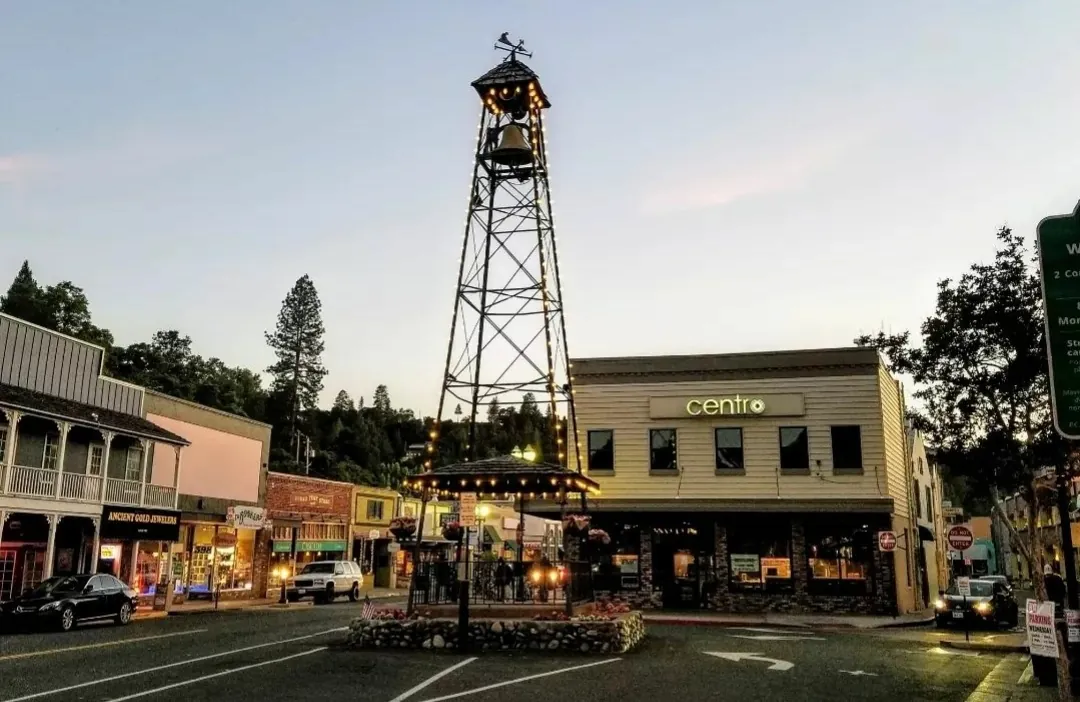
Old trees over old houses
The heart of Placerville was built long before anybody worried about how big a tree gets. Trees that went in as shade or a windbreak around a house on Main Street or in the older neighborhoods off Bedford and Cedar Ravine have had decades to reach full size, and now they stand over rooflines, garages, and the wires along the street. A mature tree that has quietly outgrown a small in-town lot is the most common removal in the seat, and it is rarely a simple one, because there is no open ground to drop it into.
That is the part people underestimate. An in-town Placerville removal is almost always a tight-access job. The tree is boxed in by the house on one side, a fence and the neighbor on the other, a power drop overhead, and a narrow driveway that a chipper can barely fit down. A tree in that spot cannot be felled in one piece. It has to be climbed and taken apart from the top, every limb roped and lowered so it does not touch the roof or the fence, which is slower and more skilled work than dropping the same tree in open acreage. The tree removal cost page explains why access moves the price as much as the tree itself.
The historic-property wrinkle
Placerville takes its old buildings seriously, and a tree next to a genuinely historic structure raises the stakes on both sides. On one hand the tree may be part of what makes the property what it is. On the other, an old tree failing onto an old building is an expensive way to lose both. The right call is usually to deal with the hazard while it is still a controlled job: remove the dead wood, take out the limbs that overhang the roof, and only remove the whole tree when it is genuinely failing rather than simply large. A good crew will tell you the difference instead of talking you into the bigger invoice. Trimming and deadwood work is covered on the tree trimming page.
Old tree leaning over the house in town? Describe it and get a crew headed your way.
The hub means the shortest response
There is a practical reason the seat is an easier place to get help fast. Placerville is the hub the whole county runs through. Highway 50 and the main routes out to Camino, Pollock Pines, Diamond Springs, and El Dorado Hills all pass through or around it, so a crew working the county is rarely far from town. When a tree comes down across a Placerville driveway in a winter storm, the drive to reach it is short compared with the long runs out to the ridge or the Divide. If you are in town, you are usually near the front of the line when a storm has everyone calling at once. Storm and fallen-tree work is on the emergency page.
That cuts the other way too. Because the seat is where the people are, it is also where the most trees stand near houses, cars, and wires, so the routine deadwood and removal calls come out of town in volume all year, storm or no storm.
Dead pines and the fire question
The pines mixed into the seat are the same drought-stressed, beetle-bitten trees standing all over the foothills, and a dead gray pine in a Placerville backyard is exactly the tree you do not want to leave standing over the house. Dead pines do not stabilize with time, they get more brittle, which makes them more dangerous and more expensive to take down the longer they wait. Even in town, much of the ground around the seat sits in or against the State Responsibility Area, so clearing dead and hazard trees back from the house is a defensible-space and insurance question, not only a tidiness one. That work is on the defensible space page.
Before you cut a big oak
The oaks around Placerville are native, and El Dorado County regulates the removal of large native oaks. A genuinely hazardous tree is treated differently than clearing a healthy oak to open a view, but a big oak can require a county permit and sometimes mitigation before it comes down, and cutting first and asking later can get expensive. A local crew can tell you when a tree is likely to need a permit and point you the right direction. This site connects you with tree removal crews. It does not perform arborist appraisals or oak reports, which are a separate specialized service.
Nearby
The crews we refer work the seat and the towns around it. Head west and the ground drops into oak country around Cameron Park and the acreage of Shingle Springs. Climb east on Highway 50 and it is conifer country up through Camino. Whichever direction your tree is, describe it on the phone and get it looked at, or read what a job like it tends to run on the cost page.
Get connected with a licensed local tree service.