Stumps and grinding
Stump grinding in Placerville
Once a tree is down, the stump is what is left, and grinding it out is how you get your yard back instead of a trip hazard and a sprout factory. Call the number on this page to reach a licensed, insured tree service that works El Dorado County. This page covers the difference between grinding and full stump removal, why getting the stump out is worth it, how grinding is priced, how deep it goes, and why it is smart to have it done at the same visit as the removal.
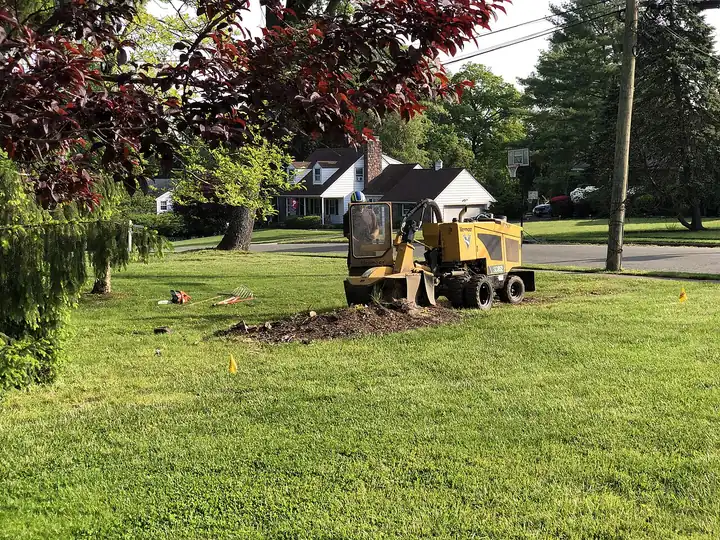
Grinding versus full stump removal
There are two ways to get rid of a stump, and they are not the same job. Stump grinding uses a machine with a spinning toothed wheel that chews the stump down into chips, working it below ground level so what remains is buried and out of sight. It is fast, it does not tear up the surrounding yard, and it is the method almost everyone wants. Full stump removal means pulling the entire stump and its main root ball out of the ground, which leaves a large hole, disturbs everything around it, and usually requires heavy equipment. Full extraction is occasionally needed, for instance when the ground has to be completely clear for construction or a foundation, but for a homeowner who just wants the stump gone, grinding is the practical choice nearly every time.
Got a stump left from a removal? Give the diameter on the phone and get it quoted.
Why grind the stump out
A stump left in the ground is not just an eyesore, it causes real problems, which is why grinding is usually worth doing rather than living with it.
Trip hazard. A stump sitting in a lawn is exactly the height to catch a foot, a mower, or a wheelbarrow, and it does not get more visible as the grass grows around it.
Resprouting. Plenty of species will not give up when the top is cut. The stump and roots push up a ring of new shoots, and you end up fighting a cluster of little trees where the old one stood. Grinding the stump and the flare stops that.
Pests and decay. A rotting stump is an open invitation to termites, carpenter ants, beetles, and fungus, and you would rather that colony not set up right next to the house.
Replanting and reclaiming the space. If you want to plant something new, lay sod, or just put the ground back to use, the stump has to go first. Grinding clears the way and leaves you a workable spot.
How grinding is priced, and how deep it goes
Stump grinding is priced by the diameter of the stump measured across the widest point at ground level, because that is what determines how much material the machine has to chew through. A small stump is quick and inexpensive, a broad old oak stump is a much bigger job, and a cluster of stumps is usually quoted together. This is why stump grinding is a separate line from the tree removal itself rather than something folded into a single flat number.
As for depth, a standard grind takes the stump down a few inches below grade, which is plenty to get grass growing over it and to hide it from view. If you plan to replant a tree or shrub in the same spot, or lay a patio or a foundation, say so, because that calls for a deeper grind to get more of the wood and roots out of the way. Tell the crew what the finished ground needs to do and they will grind to suit it.
What is left afterward, and the roots
Grinding does not leave a clean empty hole, it leaves a pile of wood chips mixed with soil where the stump was, plus a shallow depression once those chips settle. Most crews will backfill the hole with the grindings and rake it level, and the chips make a decent mulch if you want to keep them. If you would rather have clean soil to plant into, ask to have the grindings hauled and the hole topped with dirt, because that is a common add-on.
One thing grinding does not do is chase down every root. The machine takes out the stump and the root flare, the big roots radiating out at the base, but the finer roots running out through the yard are left in the ground to break down naturally over time, which they do without causing trouble. Digging out every last root is rarely necessary and would tear up the whole yard to do it. For the common worries, resprouting and the visible stump, grinding the stump and flare solves the problem.
Do it at the same visit as the removal
The most efficient time to grind a stump is right after the tree comes down, while the crew and the equipment are already on site. Bundling the grind into the removal saves a second trip charge and finishes the job in one go, so you are not left staring at a fresh stump waiting on another appointment. When you book a tree removal, ask to have the stump ground at the same time and get it quoted up front, so the finished, level yard is part of the price you agree to rather than an afterthought. The tree removal cost page explains how the removal itself is priced, with the stump as its own line on top.
Stump questions
Is stump grinding included in the tree removal price?
No, it is a separate line priced by the stump's diameter, though it is common and cheaper to have it done at the same visit. When you book a removal, ask for the stump to be quoted with it so the finished yard is part of the number you agree to, rather than a surprise later.
How deep will the stump be ground?
A standard grind goes a few inches below grade, which is enough to grow grass over it and put it out of sight. If you plan to replant in the same spot or lay a patio or foundation, ask for a deeper grind and say what the ground needs to do, so the crew takes out enough wood and root to suit it.
Will the stump grow back after grinding?
Grinding the stump and the root flare stops the resprouting that a simple cut stump can throw up. The fine roots left in the soil break down on their own without pushing new shoots. If a species is a heavy sprouter, mention it, and the crew can grind a bit wider and deeper to be sure.
What happens to the hole and the chips?
Grinding leaves wood chips mixed with soil and a shallow depression. Most crews backfill and rake it level, and the chips make usable mulch. If you want clean planting soil instead, ask to have the grindings hauled and the hole topped with dirt, which is a common add-on.
Can you grind several stumps at once?
Yes, and it is usually more economical to do them together while the machine is on site. Give the rough diameter and number of stumps on the phone and they can be quoted as a group. Clearing multiple stumps often ties in with a defensible space or lot cleanup as well.
Get connected with a licensed local tree service.