Fire clearance
Defensible space in Placerville
Defensible space is the cleared, managed buffer between your house and the wildland fuel around it, and in most of El Dorado County it is not optional. Nearly everything outside the city sits in a State Responsibility Area mapped high or very high fire hazard, which means state fire rules and, increasingly, your insurance company expect that buffer to be there. Call the number on this page to reach a licensed, insured tree service that works the county. This page covers what defensible space involves, why the tree work is the big-ticket part, and why getting it done before summer matters.
How the zones work
Defensible space is organized as zones that ring the house, with the clearing getting more aggressive the closer you are to the structure. You do not need to memorize the numbers to understand the idea.
The immediate zone, right against the house. The closest band around the structure is kept the most rigorously clear: no dead plants, no leaf and needle litter, nothing flammable pushed up against the walls, under the deck, or in the gutters. This is the ember-defense zone, and embers, not the flame front, are what ignite most homes.
The middle zone. Moving out from the house, the goal shifts to breaking up fuel so fire cannot run straight at the structure. That means spacing between shrubs and tree crowns, keeping the grass low, and clearing the dead material that carries flame.
The outer zone. Farther out, the work is thinning rather than clearing: reducing the density of trees and brush, removing dead and diseased trees, and pruning so a fire on the ground cannot climb into the canopy. The exact distances depend on your slope and the state rules, and a local crew who does this work will know what your property needs.
Need your property cleared before fire season? Describe the lot and the trees on the phone.
Ladder fuels and dead trees: the tree work
The part of defensible space that a tree crew handles, and the part that costs real money, is the vertical fuel. A ground fire stays a ground fire until it finds a way up, and the way up is called a ladder fuel: tall grass into low brush, brush into low branches, low branches into the canopy. Break that ladder and a fire has a much harder time getting into the treetops where it becomes unstoppable.
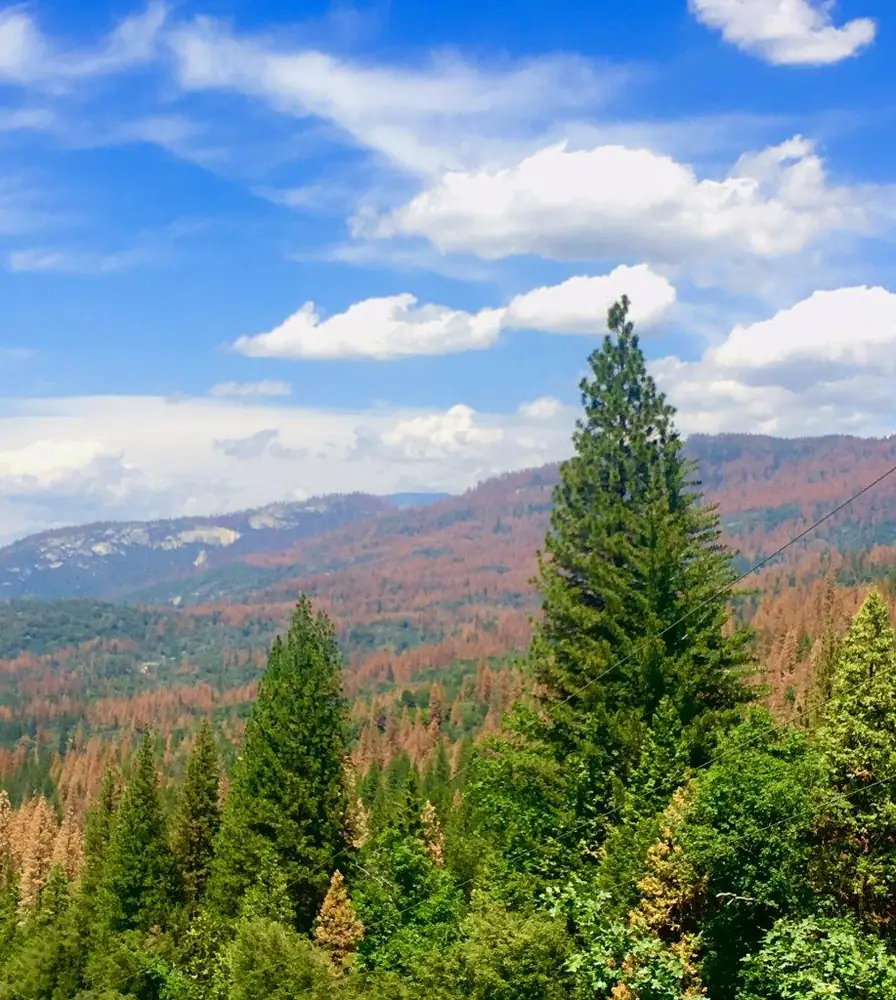
Breaking the ladder means limbing up trees so the lowest branches are well off the ground and the brush beneath them, thinning crowded stands so crowns are not touching, clearing brush out from under the trees, and above all removing the dead and dying trees. In this county the dead trees are the headline problem: drought and bark beetles have left standing dead pines all over the foothills, and a dead tree next to the house is both the biggest fire hazard on the lot and the most likely to fall on its own. Taking those out is the big-ticket line in most defensible-space jobs, and it is exactly the hazard tree removal a tree crew is built to do. Live limbs over the roof and dead wood in the canopy come off too, which overlaps with ordinary trimming.
Why insurers now inspect for it
Defensible space used to be mainly a fire-safety matter. It is now also an insurance matter, and that has changed the urgency for a lot of homeowners. After years of large wildfire losses in California, insurers have grown strict about the fuel around a house, and it is now common for a company to send an inspector, photograph the property, and issue a non-renewal or refuse to write a policy if the clearance is not there. People who have never worried about it are suddenly getting letters warning that dead trees near the home or brush against the walls put their coverage at risk.
The practical upshot is that clearing hazard trees and creating defensible space is no longer just about surviving a fire, it can be about keeping the policy that lets you own the home at all. If you have gotten one of those letters, the hazard trees and the clearance are usually what the inspector flagged, and dealing with them is what gets you back in good standing. This is not insurance advice, and your carrier sets its own requirements, but the pattern across the foothills is clear enough to plan around.
The King Fire is living memory
Nobody in this part of the county needs to be told in the abstract why this matters. The King Fire came through El Dorado County in 2014, burned a vast area, and forced evacuations across the foothills, and the people who lived through it remember exactly how fast a fire moves through dense timber and how little time there is once it starts. That memory is the reason defensible space is taken seriously here rather than treated as paperwork. A cleared, managed buffer is what gives firefighters somewhere to make a stand and gives your house a chance when the flame front and the embers arrive. Everyone up the hill toward Pollock Pines and Camino has watched a fire season since, and the dead pines standing on so many lots are a standing reminder that the fuel is still out there.
Get it done before summer
Defensible space is prevention that heads off the emergency, and it works on a calendar. The time to clear hazard trees, break up ladder fuels, and open space around the house is in the wetter, cooler part of the year, before fire season, before the annual inspection deadlines, and before the crews are booked solid by everyone who waited. A dead pine cleared on a scheduled spring day is a fraction of the cost and the drama of the same tree coming down in a fire or a summer windstorm, and it is the difference between meeting your defensible-space obligation on your own terms and scrambling under a non-renewal notice. If you are looking at dead trees or heavy brush around the house, the smart move is to get it walked and quoted now. The tree removal cost page covers what the hazard tree work runs, and clearing early is how you avoid ever needing the emergency number.
Defensible space questions
What does defensible space actually require?
In broad terms, a cleared and managed buffer around the house: no flammable litter or dead plants right against the structure, fuel broken up and spaced in the middle band, and thinning plus dead-tree removal farther out so fire cannot climb into the canopy. The exact distances depend on your slope and the state rules. A local crew who does this work can walk your lot and tell you what it needs.
Why is the tree work the expensive part?
Because removing dead and hazard trees and limbing up the rest is the labor-intensive, skilled portion of the job, and this county has a lot of standing dead pine to deal with. Raking litter and cutting brush is cheap by comparison. The dead trees near the house are usually the biggest single line, and they are the highest priority for both fire and falling risk.
My insurer sent an inspection notice. Can this help?
Often the hazard trees and the brush around the house are exactly what an inspector flags, and clearing them is what gets a property back in good standing. Your carrier sets its own requirements and this is not insurance advice, but dealing with the dead trees and the clearance is the usual fix. A crew can address the tree-related items the inspection called out.
When is the best time to have it done?
Before fire season, in the wetter and cooler months, for two reasons: the work and any burning of debris is safer then, and the crews are not yet booked solid by everyone who waited until summer. Getting it walked and quoted early means it is finished on your schedule rather than under a deadline.
Do I need a permit to remove trees for clearance?
Removing a genuinely dead or hazardous tree is generally treated differently than clearing healthy trees, but El Dorado County regulates the removal of large native oaks, and one of those can need a permit even for clearance. A local crew can tell you when a permit is likely to apply and point you to the county to confirm. This site connects you with removal crews and advises checking the permit question first; it does not perform arborist reports or appraisals.
Get connected with a licensed local tree service.